Blog
-
How to Build an Admin Dashboard with Node-RED Dashboard 2.0
Managing and analyzing increasing amounts of data becomes crucial for organizations. Dashboard 2.0 and Node-RED help organizations access the data, normalize it, and visualize it. But what about controlling who can access what data? That's where an admin-only page comes in. Now With Node-RED Dashboard 2.0, we can also create robust and secure admin-only pages easily. In this guide, we'll provide you with step-by-step instructions to Build an Admin-only page with Node-RED Dashboard 2.0.
read more... -
Role-Based Access for your Node-RED applications
Role-based access Control (RBAC) is a crucial component of modern software platforms. It provides granular control over access rights and enhances security. Integrating RBAC into the FlowFuse platform brings this level of sophistication to Node-RED, allowing users to manage their environments with precision and confidence. This blog will explore how FlowFuse's RBAC system improves both security and user experience within the Node-RED ecosystem.
-
Displaying logged in user on Node-RED Dashboard 2.0
About a month ago, a powerful solution became available to the Node-RED community to deal with users and allow multiple to interact with the same dashboard in a personalized manner. It's called the Multli user Dashboard for Node-RED. In this guide, we will provide a step-by-step guide to show you how to secure your dashboard and access and display logged in user information on Dashboard 2.0.
-
Node-RED Manufacturing Architecture
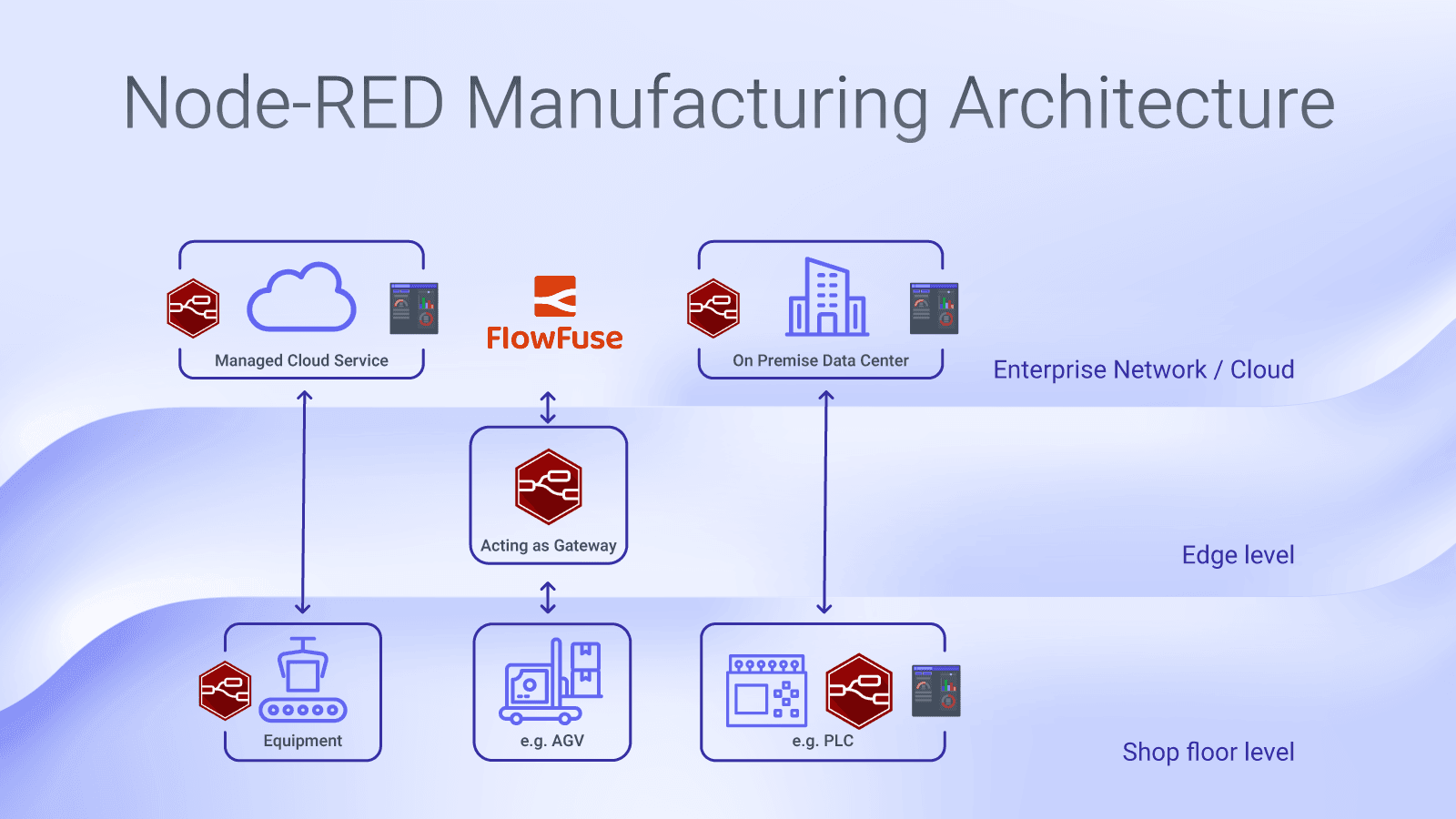
The architecture of a factory's Node-RED infrastructure is a common topic of discussion and inquiry. Fundamentally, my response to such queries unfolds in two parts. Initially, the focus must be on data organization. I champion a structure centered around a Unified Namespace, a concept I explore in depth in this article "Node-RED in a Unified Namespace Architecture." However, this is only one part of the inquiry. The other part of the question delves into the positioning of FlowFuse and Node-RED within the network infrastructure.
-
Using Kafka with Node-RED
Kafka is one of the most powerful technologies enabling seamless data communication. Many individuals are utilizing it alongside Node-RED for real-time data exchange in their IoT and IIoT applications. However, some users are encountering difficulties in obtaining assistance with Kafka-related queries.
-

FlowFuse and Gallarus Announce Strategic Partnership to Accelerate Industry 4.0 Adoption
FlowFuse, a leading provider of the low-code end-to-end development platform for industrial applications, and Gallarus Industry Solutions Limited, the leading industry 4.0 integrator in Europe dedicated to digital transformation through the deployment of the Unified Namespace (UNS) digital architecture, today announced an exciting strategic partnership. This collaboration aims to empower businesses with advanced solutions for Industry 4.0 transformation and optimized operational efficiency.
-
Getting Started with Node-RED Dashboard 2.0
With our latest release of Node-RED Dashboard 2.0, we've made some big improvements to the onboarding experience.
We're seeing over 2,000 people download Dashboard 2.0 per week, and are seeing a great buzz in the community of brand new Node-RED users, experienced Node-RED users that haven't explored a UI solution previously and existing users migrating from Dashboard 1.0.
So, with that in mind, we wanted to offer a new "Getting Started" guide that will help you get up and running with building custom user interfaces and data visualizations in Node-RED.
-
Securing HTTP Traffic for Node-RED with FlowFuse
Citizen development empowers employees to create digital solutions. However, it requires guardrails to ensure data security, operational stability, and compliance. These guardrails are what FlowFuse provides to the Node-RED community to level up their deployments. FlowFuse offers many different security measures for authentication and authorization, which all apply to different scenarios.
In this post we’ll take a look at most of them, specifically for HTTP traffic. We’ll discuss the trade-offs for auditabliltiy, convenience to use as either machine or human, among other factors.
-
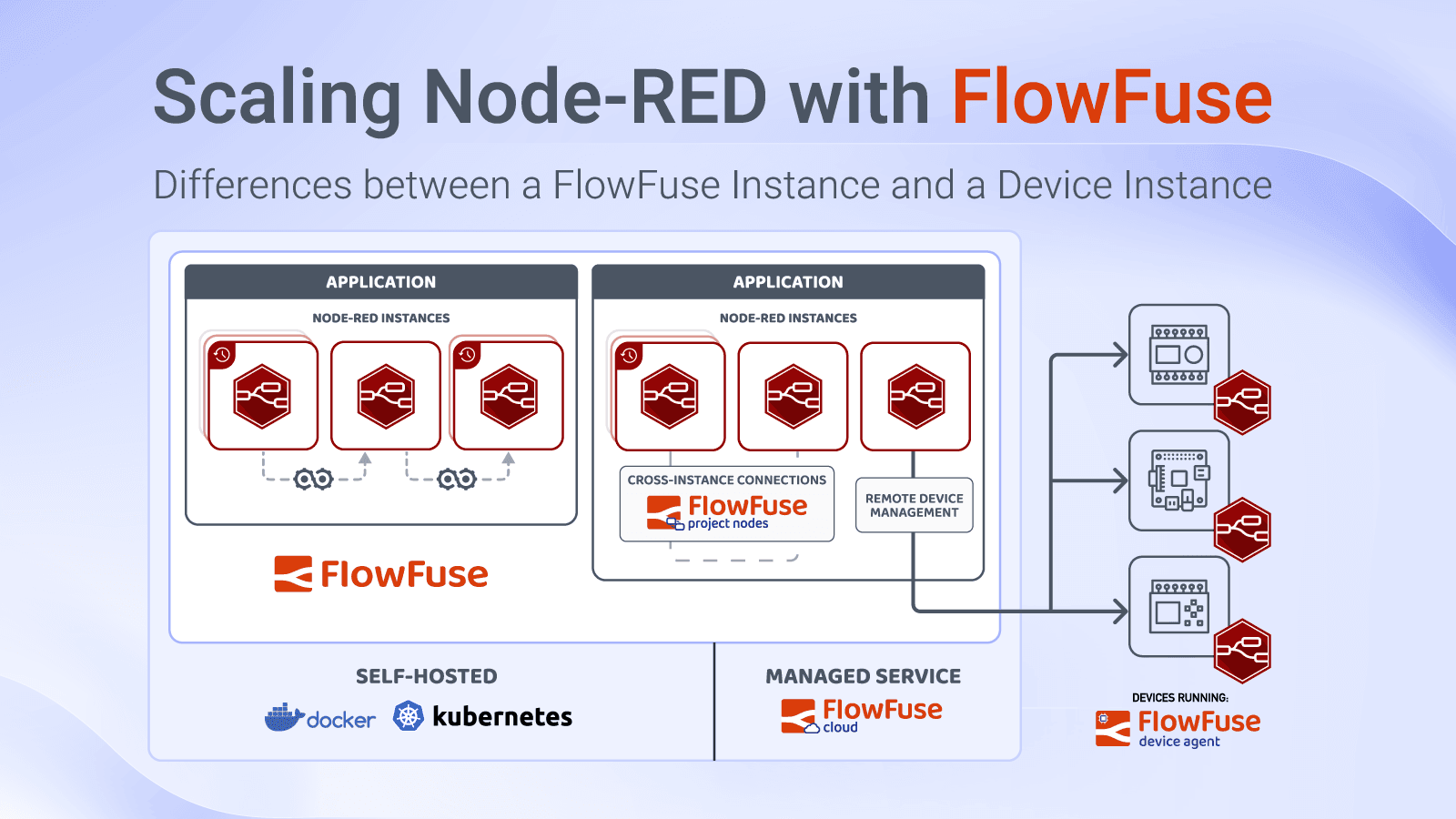
Scaling Node-RED with FlowFuse: Differences between a FlowFuse Instance and a Device Instance
FlowFuse is a Software as a Service (SaaS) platform designed to enhance the experience and capabilities of Node-RED for its users. By focusing on scalability, security, and Dev Ops, FlowFuse aims to remove some of the technical barriers associated with using Node-RED, making it easier for citizen developers to automate tasks, process data, and create applications. In this blog post, we will discuss the differences between a FlowFuse instance and a FlowFuse device instance while highlighting how FlowFuse addresses scalability challenges in Node-RED deployments.
-
How Kafka is applied in manufacturing
Have you ever wondered how manufacturing and automotive industries can effectively manage the vast amount of real-time data generated by sensors and systems throughout the production process? A few years back, these industries faced major obstacles in handling the large volume of real-time data produced by sensors placed across the production line. Even today many industries continue to grapple with similar challenges. Traditional data management systems struggle to process and analyze this data in real-time, leading to inefficiencies in operational activities and decision-making. To address these challenges, various manufacturing and automobile plants have embraced technologies like Apache Kafka.
-
FlowFuse Open Source Starter Tier Resource Limits
Today, with the latest FlowFuse release, an important change was made that updates the resource limits for our open-source, self-managed FlowFuse server tier. This change does not affect FlowFuse Cloud users in any way.
-
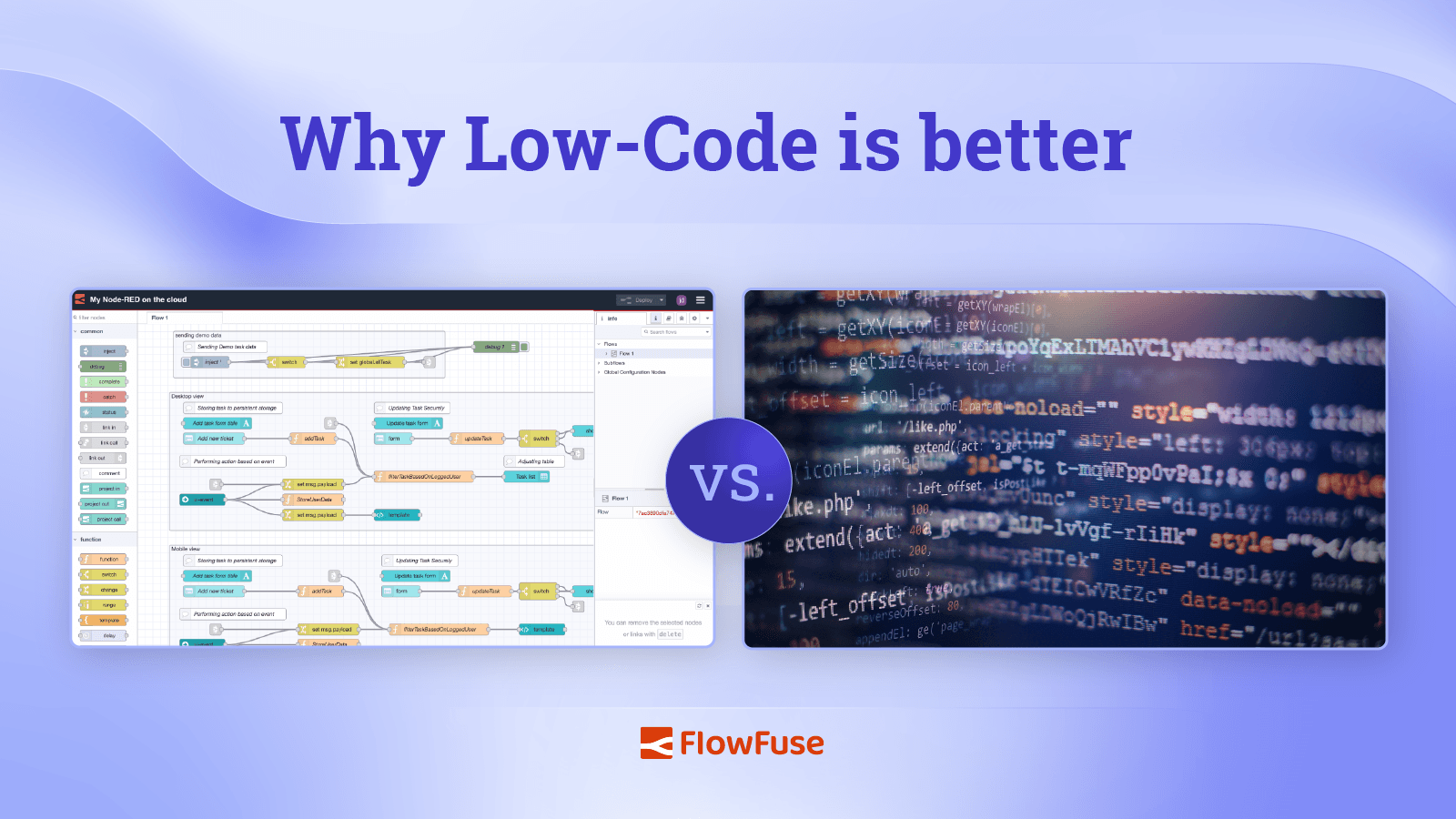
Why Low-Code is Better
There are two common reasons why new languages come about. They provide a feature missing in the existing programming languages, or it is a tool that is easier to learn and use. The latter often functions like a swiss army knife with each iteration including more and more tools. The journey of low-code is like a swiss army knife, the perfect tool for the Citizen Developer.
-
Looking towards Node-RED 4.0 and beyond
With Node-RED 4.0 coming soon, I wanted to take a look at what users can expect to see with the new release, as well as some of the new features we're working on.
-
Installing and operating Node-RED behind a firewall
Practitioners using Node-RED often find themselves in a situation where a firewall is deployed in their organization. This network configuration is a fact of life and is generally not controlled by the same people using Node-RED. Given security reigns supreme in Industrial IoT (IIoT), and a firewall offers a lot of benefits, we anticipate it will be deployed more often in the future, and as such it’s good to understand how you can get the most out of Node-RED when deployed behind a firewall.
-
History of Node-RED
In January 2013, I could have never foreseen that my fun little proof-of-concept project would become Node-RED, an open source low-code environment with millions of deployments in IoT and automation.
-

Citizen Development: Unleashing Domain Experts
Citizen development has taken the spotlight recently, but the concept itself isn't entirely new. Remember the era of "hackers"? They weren't malicious actors, but individuals who tinkered with technology, pushing boundaries and creating solutions. Today, these same problem-solving personas have evolved into "citizen developers" – business users empowered to build applications without relying solely on professional coders.
-
Storing Data: Getting Started with Node-RED
It's quite straightforward to pass plenty of useful data with each message (msg) in your flows. Not only can you store information in msg.payload, but you can also place information in any other named object, for instance, msg.store.
-
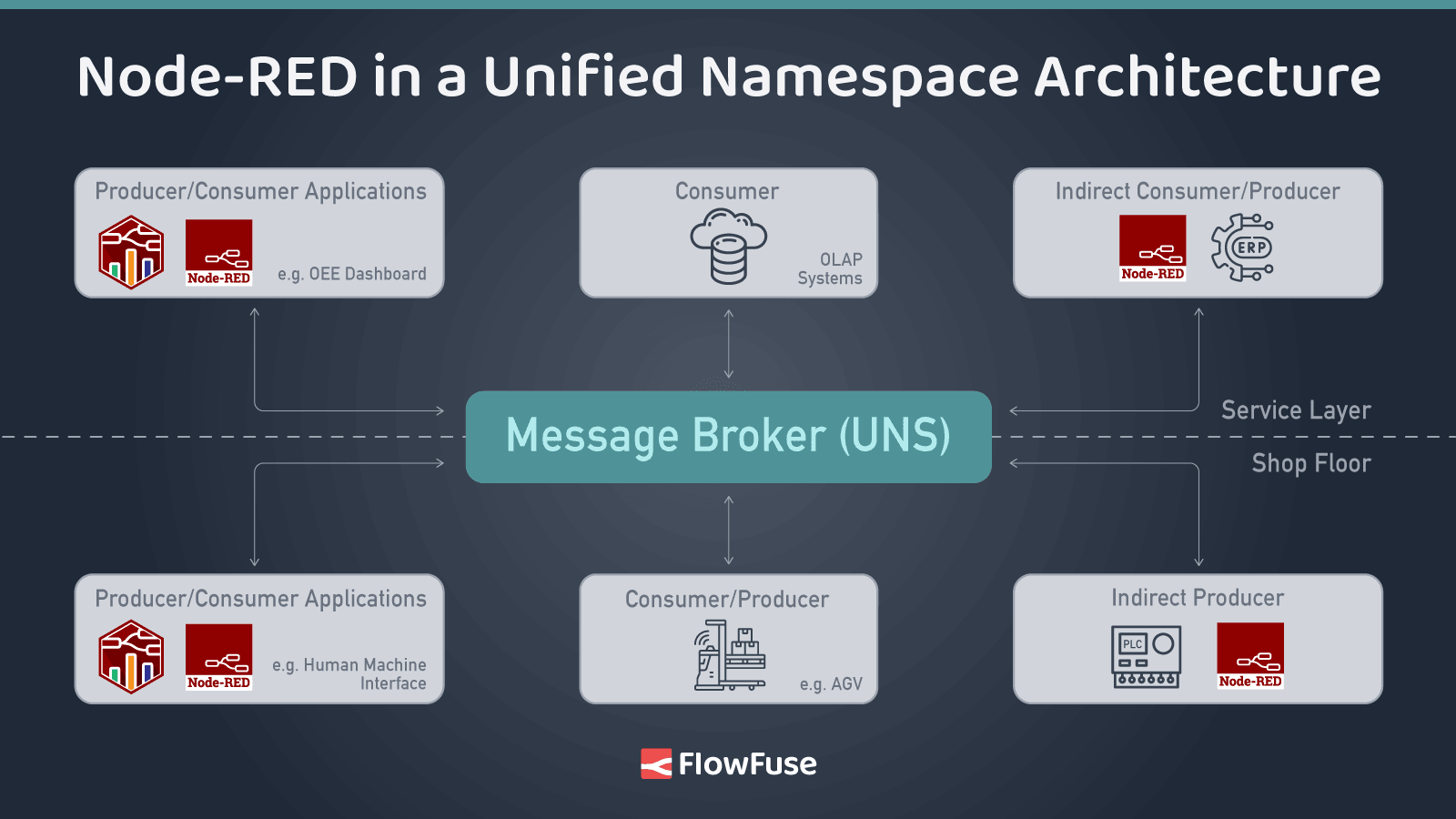
Node-RED in a Unified Namespace Architecture
As we embark on the journey toward a more interconnected industrial environment, the emergence of a Unified Namespace (UNS) as the fundamental framework for facilitating communication among various systems and devices has become a focal point of discussion. I've often been queried about the role of Node-RED in a UNS architecture. To illuminate this, let's delve into an exemplary UNS architecture, underlining the classic use cases for Node-RED within this framework.
-
Connect Node-RED to KepserverEX OPC server.
KepserverEX, often referred to as Kepware, is an OPC server that has been the important tool many manufacturing companies have used on their digital transformation journey. It plays an important role for many to extract data from PLCs, Programmable Logic Controllers, without having to directly interact with them.